07 / 10 · Machine learning · Healthcare
Breast Cancer Survivability Prediction
Survivability prediction on clinical staging data. I compared logistic regression, SVM and neural-network models, and the best one raised test accuracy from a 78.5% baseline to 91.3%.
- 91.3%
- test accuracy (from 78.5%)
- 3
- model families
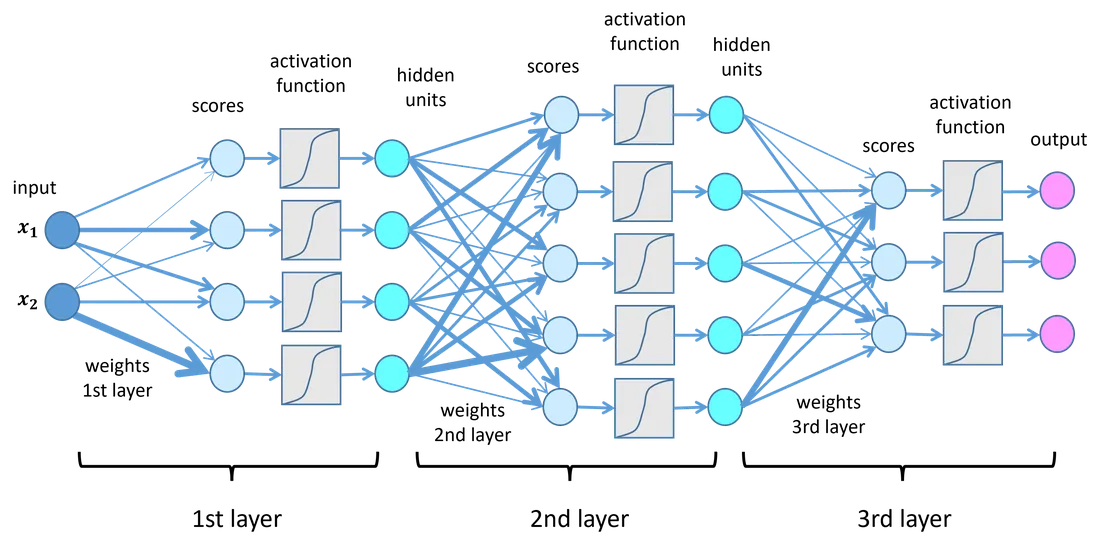
Fig. 01
Try it
AI-generated voice and avatar
01
Problem & approach
The problem
Predict survivability from clinical staging features such as tumor stage, grade, hormone status and lymph-node counts, and find out which model family does it best.
The approach
Balance and scale the data, then systematically tune three model families: regularization (L1/L2), polynomial features, SVM kernels (linear, polynomial, RBF) and network architectures.
02
How it works
- Prepare the dataClass imbalance handled with SMOTE, and features scaled with MinMaxScaler.
- TuneTuned L1/L2 regularization, polynomial feature transforms, SVM kernels (linear, polynomial, RBF) and neural-network architectures.
- CompareLogistic regression, SVM and neural-network families compared on the same data.
- ResultLogistic regression with L1 regularization and cubic features won, improving test accuracy from a 78.5% baseline to 91.3%.
03
Results & stack
- 91.3%
- test accuracy (from 78.5%)
- 3
- model families
- Python
- Scikit-learn
- Keras
- NumPy
- Pandas
- SMOTE